Does literature have a responsibility to save society from misogyny and racism? Can a plot contain racism towards black or Asian people? Can it dehumanise a woman, or declare that men are indeed the supreme creatures ever to walk the earth?
I don’t think literature has that responsibility. A plot set in a time or society that was itself misogynistic, or that enslaved certain races or peoples, can’t be expected to deny the social structure of its day and fill itself with flowery sentiment while still telling an honest story, just so that readers like us, hundreds of years later, with our moral compasses sharpened by time, can feel our activist selves have been fed. And even if a book like this were written today, I’d say it deserves the same freedom.
I’m Asian. I was born and brought up in Bangladesh. So I don’t only fall into the category of being Asian, but also of being a brown woman. Tha t would be a vulnerable position to be in if I lived in America, or in parts of the West where Asians are considered about as important as dogs. To make matters worse, even some of our continental neighbours (South Korea, for instance) think that being brown or black is a problem. So believe me, I know where I’m coming from when I say literature has no responsibility to ensure social justice. It can have empowering elements of equality, justice, and morality, but only when they arise naturally from the plot, not when they are forced into it. Take away the freedom to tell a story, and all we’d be left with is Hello Kitty and stupid sci-fi manga. That wouldn’t be a great situation for literature, would it? Sorry if I sounded harsh on this one
“I say let’s criticise better; let’s ask the right and humane questions. ‘Why would he write a misogynistic plot?’ isn’t a very good one. We need to separate literary criticism from activism.”
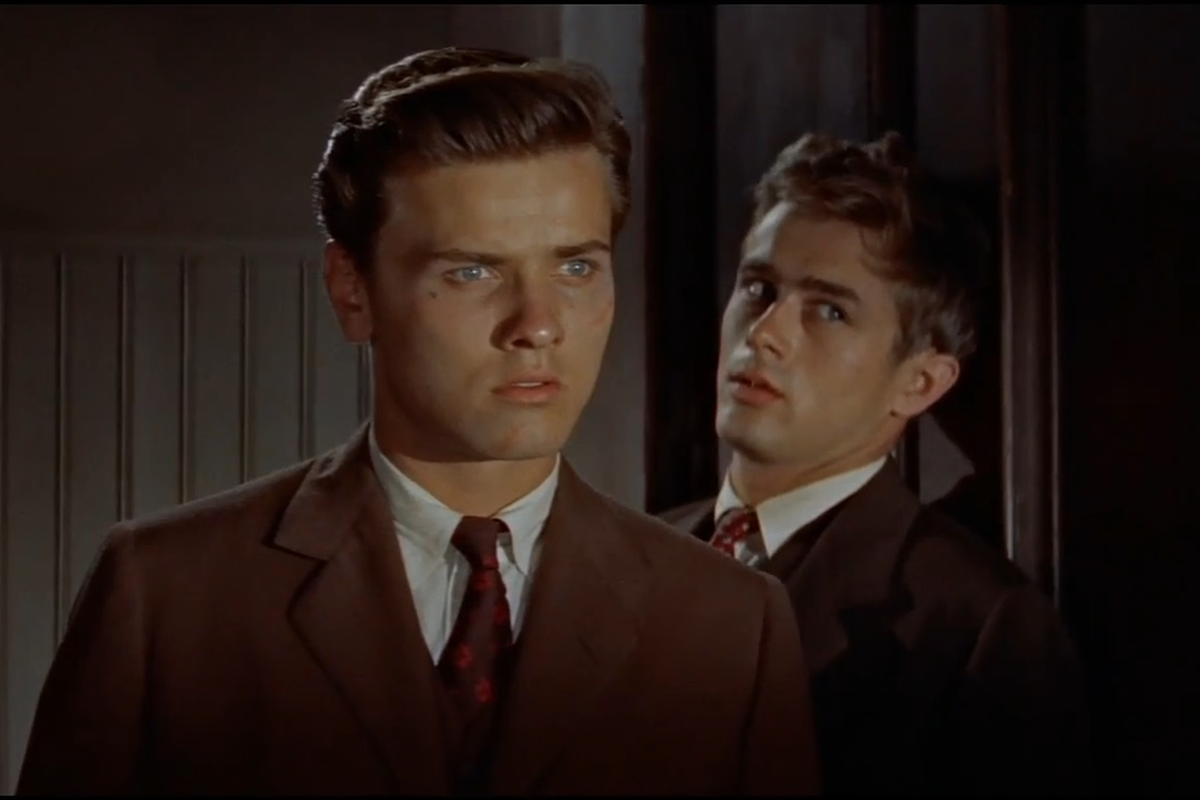
We all know the plot of East of Eden by now. The 1952 novel by the American novelist John Steinbeck was inspired by and built around stories from the Book of Genesis. To be honest, I haven’t read Genesis myself; I’ve learned all this from the internet. So, the plot and its central conflict mirror the story of Cain and Abel across generations. Charles and Adam, and later Cal and Aron, live out the same old story of sibling rivalry, a parent’s favour, and jealousy.
If I’m not mistaken, even the title comes from Genesis 4:16? Which describes where Cain went after God banished him: “And Cain went out from the presence of the Lord, and dwelt in the land of Nod, on the east of Eden.” And the book’s big philosophical moment rests on one Hebrew word, timshel, meaning “thou mayest”. It’s about free will, the idea that we get to choose whether or not to overcome sin, and it comes straight from the story of Cain.
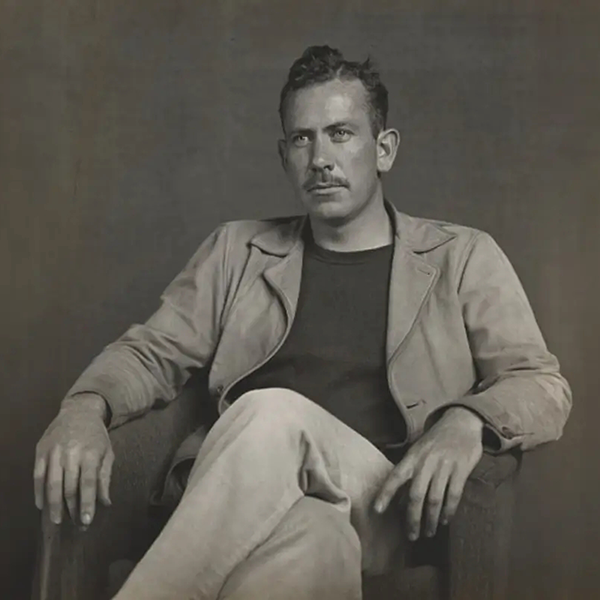
I learned from one review that the character Samuel Hamilton in the novel East of Eden is based on John Steinbeck’s actual maternal grandfather. Steinbeck portrays Samuel as a wise, philosophical patriarch and a friend to Adam Trask. While the character closely mirrors his real grandfather’s personality, background, and family structure, Steinbeck also blended historical fact with fiction to fit the narrative themes of the book.
My first criticism of the book would be that Steinbeck fumbled Catherine Trask, or Cathy. He gave her layers, then tried to make her pathetic.
Cathy is powerful. There’s no way you can make her do something or say yes unless she does it willingly. Not only is she stubborn, but she’s also cunning and at times cruel, and her sinister side was, to me, what made her so compelling, even if it carried a symbolic meaning. Perhaps the reason we saw her act out of character at times was to make room for the male characters to shine. And the forced dehumanising sometimes felt like a stance on women rather than simply a part of the plot. I can give a very clear example. We have a narrator, and we have the characters’ own perspectives. When Adam meets Cathy again (by then Kate), he looks at her hands and sees how they have aged. That’s all Adam thinks. But at that very moment the narrator takes it upon himself to exaggerate, describing her hands as wrinkled like a monkey’s paws. It felt completely forced, a little cruel even. The racism in some places felt unnecessary too.
The story held together until Cathy, or Kate, took over the whorehouse. After that, in my opinion, it kept dragging. The same logic was repeated with their sons until the end of the book. Even if the concept was biblical, it was exhausting. Some dialogue existed for its own sake, Lee’s moods kept shifting, Adam had nothing to do, and nothing much happened at the whorehouse either. I didn’t find anything impressive in the whole section on the twins, Adam and Cathy’s sons, Cal and Aron.
That is, until near the end, when Steinbeck was generous enough to offer something: Cathy’s complicated motherly love, which blooms only for her fair-haired son. This was probably the least the author could do to give her a little of her authenticity back, after trying so hard to make her pathetic.
I’m sure that if I were racist and misogynistic, I would have enjoyed the story more. But since I’m not, it became tiring and at times even annoying.
Still, I think some of us readers have done East of Eden dirty. We can criticise a book and still read it, right? The other day I came across a video in which a reader said she wouldn’t read any male philosophers anymore because they didn’t acknowledge the brilliance of women. I understand where that anger comes from; I really do. But it’s a dangerous position to take, and an anti-intellectual one too.
We don’t want to become the very tyrant we set out to fight in the name of justice, the one that has historically and systematically rejected the brilliance of women. Rejecting male philosophers does nothing to help us discover the remarkable female minds we still don’t know about. Their work still shows us how thought evolved. There’s no wise Socrates without Diotima, yet sadly Diotima survives only through Socrates, like so many women standing behind the successful men of history. That hurts, but these works are also proof of their time, of how people used to think and where society stood.
The very fact that we now see the exclusion of women from every field as a problem means we’re aware, and that we’re keeping society from going back to where it was. But that doesn’t mean wiping out everything we’ve inherited from the past, even when it doesn’t match our idea of justice today. I say let’s criticise better; let’s ask the right and humane questions. “Why would he write a misogynistic/racist plot?” isn’t a very good one. We need to separate literary criticism from activism. Some of us may have mixed the two up.
Now, on to what I liked. I thought the first three chapters were great, and chapter three in particular is one of the best things I’ve ever read. The prose is beautiful throughout, but that chapter is so vivid that everything comes alive. The complicated relationship between the brothers, the violence, the uncertainty, and the decisions were all masterfully crafted. In my opinion, it’s the best chapter in the whole novel. I also loved the way the author introduced Cathy. Before he began framing her as evil through a moral lens, she was a beautiful mystery, and I loved that mystery. Her relationship with Charles was the cherry on top. I didn’t think it was misogynistic to let her make that choice on the very day of the wedding, especially when the men are sleeping with whomever they like. I liked that twist. I know the plot has plenty of misogynistic elements, but this wasn’t one of them.
I wish the rest of the book had been like this too; it was a little disappointing to accept that it wasn’t. By the time there were only fifty pages left, I was hanging on by my last threads of patience. It was exhausting to read.
Even so, it was more enjoyable than most books I’ve read. And although the font in this Penguin edition was tiny, I easily read a hundred pages in one sitting more than once. Big books have their own transformative power, don’t they? You begin at point A, and by the time you finish, the lands are gone, the ranch owners have moved to the cities, and the little boys and girls have grown up. And somewhere along the way, you have been transformed with them, watching lives and seasons pass by.